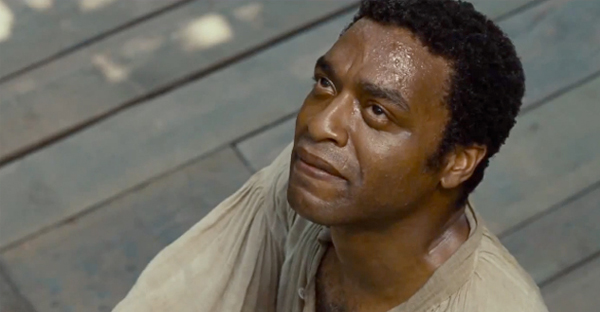
The USC Scripter Award was announced last night (around the same time as the Art Directors Guild). This award is for films with adapted screenplays only, but what make it special is that it awards the source material as well as the screenplay. Thus, the original Solomon Northrup took his first award of the season for his 161 year old memoir 12 Year a Slave, alongside screenwriter John Ridley. They beat out the writers of Captain Phillips, Philomena, The Spectacular Now, and What Maisie Knew.
The Art Director’s Guild announced its winners last night (around the same time as the USC Scripter). They divide their nominees into three categories: Period, Contemporary, and Fantasy. The winners were, respectively, The Great Gatsby, Her, and Gravity. All three were nomination for Oscar’s Best Production Design, alone with American Hustle and 12 Years a Slave. None of these wins are particularly surprising, but it’s wonderful to see K.K. Barrett’s amazing designs for Her get some recognition. Perhaps the oddest thing about these awards is that Her‘s beautiful near-futurism was considered “contemporary,” while Gravity‘s contemporary and not-all-that-fantastical space station designs were placed in “fantasy.” Oh well, at least they both won.
Here is the complete list of the ADG Award winners. (Click here for the nominations.)
Excellence in Production Design – Period Film “The Great Gatsby” (Catherine Martin)
Excellence in Production Design – Contemporary Film “Her” (K.K. Barrett)
Excellence in Production Design – Fantasy Film “Gravity” (Andy Nicholson)
Excellence in Production Design – TV Movie or Miniseries “Behind the Candelabra” (Howard Cummings)
Excellence in Production Design – One-Hour Single-Camera Series “Game of Thrones” (Gemma Jackson)
Excellence in Production Design – Half-Hour Single-Camera Series “Veep” (Jim Gloster)
Excellence in Production Design – Multi-Camera, Variety or Unscripted Series “Portlandia” (Tyler Robinson)
Excellence in Production Design – Awards, Music or Game Shows “67th Annual Tony Awards” (Steve Bass)
Excellence in Production Design – Short Format Live-Action Series “Battlestar Galactica: Blood and Chrome” (Bryan Kane)
Excellence in Production Design – Commercials, PSAs, Promos or Music Videos “Call of Duty: Ghosts” – “Epic Night Out” (Todd Cherniawsky)
The Editor’s guild, the American Cinema Editors (or ACE), announced their awards Friday night. In doing so they did their best to throw open the doors on this crazy, super-competitive Oscar season – doors that had nonetheless seemed to be closing recently around Gravity as the most likely winner of the top prize.
ACE separates nominees into Comedy and Drama, so American Hustle‘s win in the former was unsurprising. It was the only Oscar nominee in the category, and it’s biggest competition was The Wolf of Wall Street. The biggest competition was for Drama, where top Oscar contenders Gravity and 12 Years a Slave were beat out by Captain Phillips.
In hindsight, perhaps this was as big a shocker as it seems. Phillips‘ director Paul Greengrass had already been selected to receive the guild’s Golden Eddie Filmmaker of the Year award. Meanwhile, the film’s editor Christopher Rouse is hugely respected within the industry, and his work really was fantastic. There is precedent here: in 2007 Rouse and Greengrass’ The Bourne Ultimatum beat Oscar frontrunners No Country for Old Men, and There Will Be Blood, before going on to take the Editing Oscar as well. Add to that the general rule that “more” usually wins in technical categories. Gravity, whose technical marvel is undeniable, builds its suspense in part through the use of several extremely long takes. In light of that it’s really no surprise that Rouse’ tight, quick-cut style would be favored by the editors.
Does that mean Phillips will go on to do the same in the Oscars’ Editing category? Possibly. Gravity or 12 Years or even Hustle could still take it if any of those films start to sweep. But this also could be the best opportunity to reward a highly admired film that nonetheless took a bit of a beating on nomination day, missing out on expected nods for Greengrass and Tom Hanks. If it won, it probably won’t mean much for the top prize beyond helping to keep us all guessing to the very end.
Here is the complete list of the ACE Eddie Award winners. (Click here for the nominations.)
Best Edited Feature Film (Dramatic)
“Captain Phillips”
Christopher Rouse, A.C.E.
Best Edited Feature Film (Comedy or Musical)
“American Hustle”
Jay Cassidy, A.C.E., Crispin Struthers & Alan Baumgarten, A.C.E.
Best Animated Feature Film
“Frozen”
Jeff Draheim
Best Edited Documenatary (Feature)
“20 Feet from Stardom”
Douglas Blush, Kevin Klauber & Jason Zeldes
Best Edited Documentary (Feature)
“The Assassination of President Kennedy”
Chris A. Peterson
Best Edited Half-Hour Series for Television
“The Office” – “Finale”
David Rogers & Claire Scanlon
Best Edited One-Hour Series for Commercial Television
“Breaking Bad” – “Felina”
Skip MacDonald A.C.E.
Best Edited One-Hour Series for Non-Commercial Television
“Homeland” – “Big Man in Tehran”
Terry Kelley, A.C.E.
Best Edited Miniseries or Motion Picture for Television
“Behind the Candelabra”?
Mary Ann Bernard
Best Edited Non-Scripted Series
“Anthony Bourdain: Parts Unknown” – “Tokyo”
Nick Brigden
Best Student Editing
Ambar Salinas, Video Symphony
ACE Golden Eddie Filmmaker of the Year Award
Paul Greengrass
Lifetime Career Achievement Award
Richard Halsey, A.C.E.
Robert C. Jones
It’s Friday once again, and that means it’s time for another GrabBag! – our weekly mishmash of links and videos to get you through the weekend.
There’s a new clip from Wes Anderson’s The Grand Budapest Hotel. Reviews have just started coming out from its premier in Berlin, and needless to say, I’m even more excited.
Dallas Buyers Club’s Jared Leto got heckled for being a straight man playing a transgender woman. His initial response was perfect enough, but then he proceeded to invite the heckler backstage for a “heart-to-heart” conversation about the subject.
The 12 Years a Slave team is in full campaign mode. Here’s Steve McQueen on Nightline. Also, Lupita Nyong’o talks to Vogue about how she got into film…
… and screenwriter John Ridley talks to Bill Maher.
Gender inequality in the film industry summed up in this fantastic infographic. (New York Film Academy actually published this several months ago, but it’s still and always relevant.)
The team behind The Hunger Games: Mockingjay – which he was still filming when he died – released an offical statement. His performance as Plutarch Heavensbee in Catching Fire was fantastic. I hope they shot enough new footage to shoot around him, because I don’t know how anybody will be able to fill his shoes.
Finally, here is by far the best compilation/tribute video I’ve seen yet…
That’s all for this week’s GrabBag. Enjoy your weekend and try to stay warm!
Mascots for the Sochi Winter Olympics, apparently.
The Winter Olympics in Sochi begin tonight. Well today actually. By the time you read this the opening ceremony has probably already happened, but that’s what we get for being in the Western Hemisphere. Over the course of the next several days, I will likely watch several events I could otherwise care less about (Ice Dancing?). But this is the Olympics; everybody watches them!
Except this year that’s not so true. George Takei (of whom I count myself as a Facebook Fan) and many others have been highly outspoken about boycotting this year’s games in protest to host country Russia’s draconian policies toward the LGBTQ community. Of course I fully agree with and support Takei’s stance. I hope beyond hope that the boycott gains traction and encourages IOC to vet their choices more carefully and maybe even shames Russia’s leaders into changing their policies. (That won’t happen, but we can hope. That’s what protests are about, hope for change. If change were easy we wouldn’t need to protest.)
The problem is, despite my support for the boycott, I just told you I’m going to watch the Olympics. I’m not the only one. In fact I’d be willing to bet that most of you reaching this are struggling (though probably less than you like to admit) with this same conflict. So how do we justify this kind of internal dichotomy?
In fact, this is a question I’ve been trying to answer for years. My fiancé is an intelligent, caring, progressive, liberal-minded modern woman who nonetheless loves watching Jersey Shore, 16 and Pregnant, and Here Comes Honey Boo-Boo, among several other similar cultural abscesses. I know countless people who watch every single episode of American Idol. Hell, even I myself feel the occasional need to watch Michael Bay movies.
In my opinion shows like these go part and parcel with a vast stupidification of our American cultural identity. To paraphrase Billy Madison’s principal, everyone is now dumber for having watched them. I (playfully) take people to task over their TV preferences on a regular basis. But in all honesty none of that actually changes the respect, admiration, or love I have for them as friends, colleagues, partners.
For much of my adult life I have believed that by watching something, you are implicitly condoning what’s on screen. In a way I still do. No, I don’t mean that by watching 12 Years a Slaveyou are supporting slavery (obviously). But you support the values that these filmmakers and this story, being told in this way, stand for.
But in the case of culturally empty or aberrant entertainment, does it really matter if you watch? Does that implicit support actually mean anything? Yes and no, but mostly (probably) no.
I am not in a Nielsen home. I don’t think I know anybody who is. Nobody is going to know that I’m watching the Olympics except those I tell. I raise the conversation, and therefore awareness, by talking about these shows, but my voice alone is negligible in the dull roar that already exists. Putting those mascots at the top of this blog post is probably the worst impact I can make.
Sure, Hulu keeps track of every time my fiancé watches Honey Boo-Boo, but our subscription would be the same whether we watch that or The Office. I’m not spending money I wouldn’t otherwise spend. I’m not financially supporting these shows or their advertisers any more than I otherwise would. When was the last time you bought something directly because of a TV ad? I bought a Pizza Hut pizza after a football game a few weeks ago, but other than that I can’t think of a single example.
Ok so as I write these arguments, I keep coming up with more and better counter-arguments. Reasons I should turn off the TV and tell you all to do the same. But you know what? I’m not going to. Why? I don’t know; I just don’t feel like it. I want to watch the Olympics.
And that’s as good an answer as you’re going to get. When I started writing this article, I wasn’t sure which side of the titular question my eventual answer would fall. Now at the end, I’m even less sure. You’re going to have to choose your own answer. Or don’t. Do what ever feels right or good or fun or whatever.
Me, I’m going to go eat cake and nachos and complain about not losing weight.
First off, after my last post about it several people told me I should’ve included a link to the song itself. While I can’t in good conscience recommend putting yourself through the torture of listening to it, I suppose I’m an enabler just by talking about it. I might as well go all the way and embed it. But you’re responsible for your own decisions…
Despite the fact that the nomination is an embarrassment that never should’ve happened in the first place, the punishment reeks of hypocrisy. According to a private investigator hired by the PR firm for one of the non-nominated songs, Bruce Broughton (the composer and former head of the Academy’s Music Branch) sent a personal email to about 70 of the branches 240-ish voting members. In the email he pointed to the long screener DVD that that all voters got, noting which track was his and asking voters not to overlook it.
The innocence of that request coming from an insider with a conflict of interest is debatable. But against the standard practices of well-funded campaigns by big studios – who regularly play on the fringes of the rules and whose PR firms are known to call up individual voters personally to ask for votes – this little email looks like a drop in the bucket. It didn’t even go out to a majority of the voters.
Now it looks a lot like the Academy is punishing the little guy, while the big guys go free. Why? Because they can; because it sends a statement; and because they can’t send that statement to the contenders with more lots of financial backing to fight it. Money money money.
After they announced the decision to rescind the nomination, there’s been a backlash in the press (who are entering that lull between Sundance and The Oscars where there’s less “real” news to report on). Last Saturday, in response to that backlash, the Academy released the following statement…
“The Board of Governors’ decision to rescind the Original Song nomination for ‘Alone Yet Not Alone,’ music by Bruce Broughton, was made thoughtfully and after careful consideration. The Academy takes very seriously anything that undermines the integrity of the Oscars voting process. The Board regretfully concluded that Mr. Broughton’s actions did precisely that.
“The nominating process for Original Song is intended to be anonymous, with each eligible song listed only by title and the name of the film in which it is used — the idea being to prevent favoritism and promote unbiased voting. It’s been a long-standing policy and practice of the Academy — as well as a requirement of Rule 5.3 of the 86th Academy Awards Rules — to omit composer and lyricist credits from the DVD of eligible songs that are sent to members of the Music Branch. The Academy wants members to vote for nominees based solely on the achievement of a particular song in a movie, without regard to who may have written it.
“Mr. Broughton sent an email to at least 70 of his fellow Music Branch members — nearly one-third of the branch’s 240 members. When he identified the song as track #57 as one he had composed, and asked voting branch members to listen to it, he took advantage of information that few other potential nominees are privy to. As a former Academy Governor and current member of the Music Branch’s executive committee, Mr. Broughton should have been more cautious about acting in a way that made it appear as if he were taking advantage of his position to exert undue influence. At a minimum, his actions called into question whether the process was ‘fair and equitable,’ as the Academy’s rules require. The Academy is dedicated to doing everything it can to ensure a level playing field for all potential Oscar contenders — including those who don’t enjoy the access, knowledge, and influence of a long-standing Academy insider.”
Broughton, meanwhile, continued to defend himself in an interview with the music composition software company Sibelius. (The bulk of the interview is about his musical process and use of their software, but he discusses the the Oscar controversy too.)
So was it the wrong move to take away his nomination (along with that of his lyricist)? Broughton’s influence within the branch obviously holds clout. People respect him. Either it’s a good-ol’-boys club or voters must believe that his position in the industry can be helpful to their careers if they vote for him. Otherwise there is no way such an objectively terrible song would’ve received enough votes to get nominated. Of course that’s just my speculation, but if I’m thinking it I’m sure others are too.
No one believes the Academy is capable, or necessarily even wants to, change campaign practices that have evolved over decades. But if the don’t draw a line on this kind of insider vote-grabbing, it’ll become precedent and only get worse and worse. The process is already nightmare of political backdoor haggling. It’s the least they can do to try and stem the tide and preserve the slightest shred of dignity for their Awards.
I am a Seattle Seahawks fan. I came by that title recently, but don’t mistake me for some fair-weather fan or sore winner who should just shut up and let the Broncos fans mourn their fallen. I’ve never really been all that into sports. My road to fandom has been a long one, but last night I think I finally reached my destination.
In high school I went to every single football game as part of my marching band. Through 4 years and over 120 quarters I never once could figure out what the hell I was watching. I didn’t know what a “down” was and couldn’t understand why the refs kept blowing their whistles and stopping the game every few seconds. Honestly I thought we were just a terrible team. (In reality we ended most seasons around 5-5, so… meh.)
In college marching band I was forced to learn how the game was played. We played the same short fanfare immediately after every first down. Since it took several seconds to climb into my cumbersome sousaphone, I had to learn how to watch the game and anticipate what was happening so I could be ready to play on the first note. It was a slow process, but by the end of the first year I had a decent grasp of the basics.
At the time my Arkansas Razorbacks were a pretty good team – never amazing, but not at all bad. We made it to a mid-level bowl game every year. Pretty quickly I learned to root for my team and actually began to get very emotionally invested in their games. By the end of my 5 years I was a certified Razorback fan. I even got excited about watching other college games when their outcomes might influence my own teams rankings.
But while I understood collegiate sports, I still hated the professional arena: it’s easy to have passion when you have your own school to root for, but I’ve never had a reason to care about any pro team. At that point I had only ever lived in Oklahoma and Arkansas; neither state has a team. Pro sports in general always just seemed like synthetic fandom generated by marketing teams for the sole purpose of separating idiots from their money.
About 6 years ago I moved to St Louis, but the Rams don’t exactly make it easy for fans. (I did start getting into the Cardinals, but baseball is too inherently boring to get really jazzed about.) Then 3 years ago I fell in love with a crazy Pats fan. She recently agreed to marry me, which may call her decision-making skills into question, but the heart wants what it wants. My heart wants her, and her heart wants Tom Brady, so there we go. She’s from Michigan and went to Brady’s Alma Mater. She would be a Lions fan too, if they weren’t so hard to root for. But Red Wings are sacred.
So I started watching pro games with her. I took her side, rooted for her teams, and enjoyed myself. I even got really excited about the games. When we didn’t care about either team, I just rooted for the underdog. Everybody loves underdogs. But I never felt any real ownership for my newly inherited teams the way I did with Arkansas. Why should I care about the lives and careers of one particular group of people over another, just by virtue of where I happen to live or where the woman I love happened to get her Bachelor’s degree years before I met her.
So I took things into my own hands. This past August, as the season began, I made the conscious decision to choose an NFL team at random to root for throughout this season. OK, it might not have been completely random: I’ve always loved the Pacific Northwest, and I like the cool Inuit-style logo design and the fun neon green accents in their uniforms. Not great reasons, to be sure, but no more arbitrary than any other I have at my disposal. But at least the choice was finally mine own. I made the decision: the Seattle Seahawks are my team.
There’s no way I could’ve known back then how their season would turn out. I had kind of pegged them for a middling team that nobody gave much thought to, and honestly, that was part of the appeal. Their games never made regional network TV in St Louis, so I figured they were just one of “those other teams.” No one I knew was either rooting for or against them. They were a clean slate, which meant they could be my team easily without any baggage.
As the season went on I discovered real tangible reasons to root for them. How could I have guessed they would go on to have the #1 defense in the league or the best regular-season record? I became a fan of Marshawn Lynch, the only running back I have ever enjoyed watching. Admit it, passing is usually much more exciting than running, right? But I could actually see his incredible talent for falling forward and gaining a crazy amount of yards after being tackled. I enjoyed watching interviews with Russell Wilson, who I am convinced will be an extremely popular TV commentator someday. I learned terms like “The 12th Man” and “Legion of Boom”. I learned about their battle to hold the record for loudest stadium noise and discovered I wasn’t alone in my fandom.
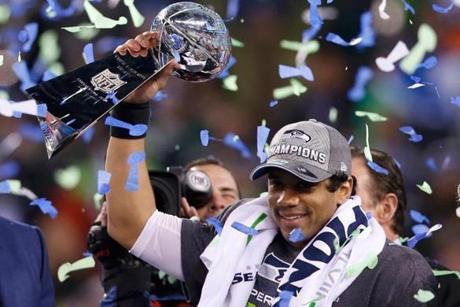
Then came last night’s Super Bowl. Under most circumstances I would’ve considered that a boring game. I think most people did. A complete blowout, with absolutely zero competition from the Broncos. But the winning team was my team! Not to mention, everyone seemed to be predicting a victory, even if a narrow one, for Denver. We were the underdogs. I love rooting for underdogs! And then not only did we win, we utterly dominated the field in every single possible aspect. I had a blast watching it!
And that sealed the deal. When I made this choice 6 months ago, I had planned on it being a silly little one-year thing. I would pick a team to root for this year, and a completely different random one next year, and the next, and so on. But that’s not going happen now. I found my team. I am a certified Seahawks fan. No scratch that. I’m am part of the 12th Man. I am a Seahawk. BOOM!
Philip Seymour Hoffman was found dead today of an apparent drug overdose. You can read all the sad details here, here, or at any number of other news outlets. I prefer to remember some of my favorite of his great performances.
Last night several major contenders stopped off at three separate awards ceremonies on their way to possible Oscar glory in March, as the WGA, ASC, and Annie Awards all announced their winners.
The Writers Guild of America (WGA) awarded Spike Jone (Her) for Original Screenplay and Billy Ray (Captain Phillips) for Adapted. These awards sometimes don’t translate to Oscars since every year several major contenders won’t pass the WGA’s strict eligibility rules. Such is the case in this years Adapted category, where presumed frontrunner John Ridley (12 Years a Slave) was ineligible. For Original, however, the nominees match 5-for-5 between the Guild and the Academy. So far it’s been a tight exciting race, between nomination leader American Hustle and the arguably more inventive and writerly Her. The latter’s win last night could signal an eventual win in March, but don’t count out the former. It’s clearly beloved and may be the best option to give David O. Russell an Oscar.
In the Documentary category Oscar-snubbed Sarah Polley won for Stories We Tell (which I still really really need to see). Scroll down for the complete list of WGA award winners.
The American Society of Cinematographers (ASC) gave their top award to Gravity‘s Emmanuel Lubezki. This is pretty unsurprising, as Lubezki has been one of the most dominant frontrunners in this entire season. That said, it’s a telling win: This is the first 3D work to be awarded by the ASC, who recently passed over eventual Oscar-winners Hugo and Life of Pi. If Lubezki can win despite their more… “traditional” preferences, nothing can stop him now. And it’s a good thing too. He is a fantastic cinematographer, and even though this is his third ASC win after Children of Men and The Tree of Life, he has never won the Oscar. (The latter lost out to Life of Pi, as I mentioned earlier.) Scroll down for the complete list of ASC award winners.
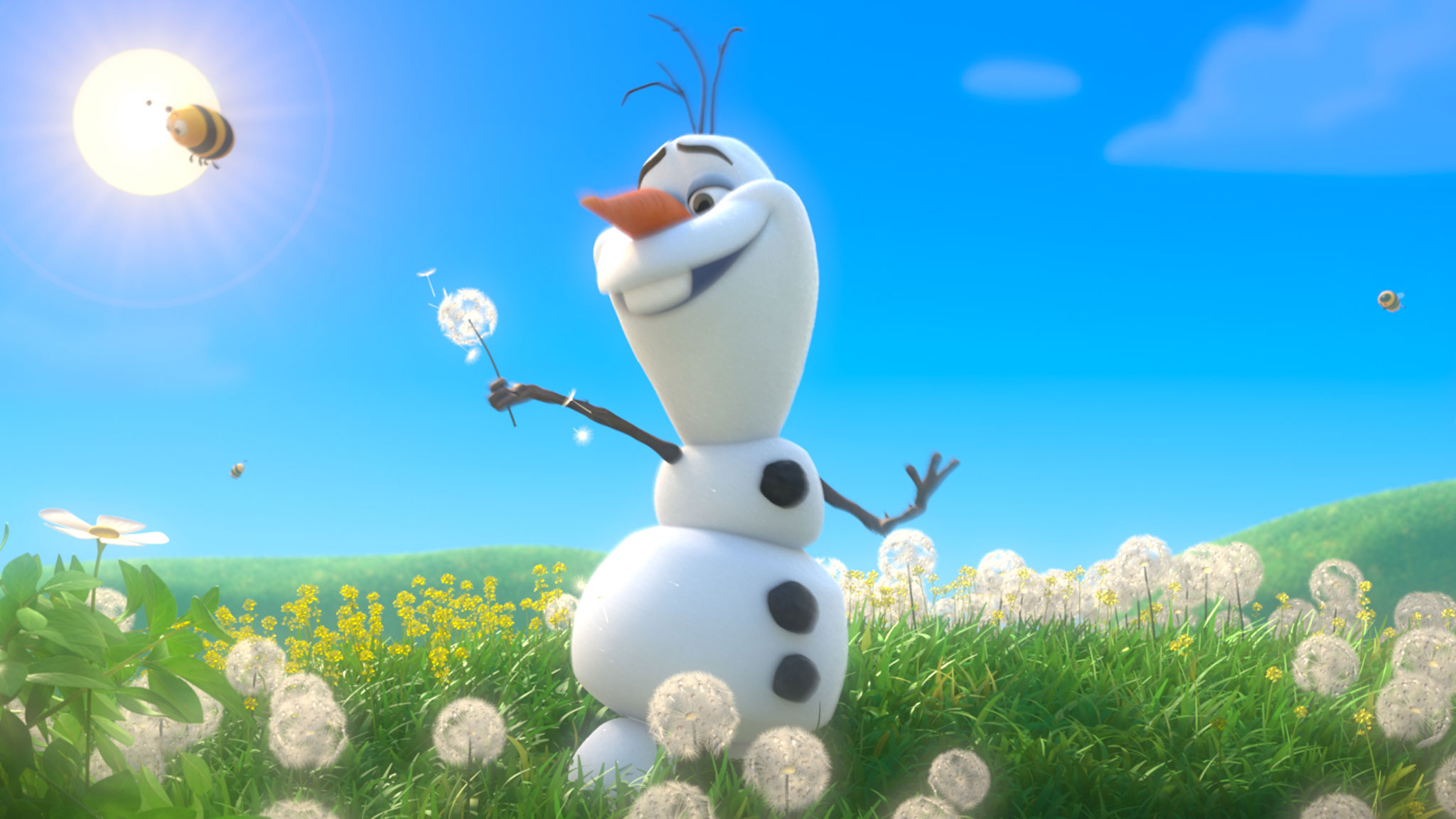
The Annie Awards are often one of my favorite lists, since they have lots of very specific awards for various area of expertise in animation. This year the Oscar frontrunner Frozen dominated with 5 awards, including Best Animated Feature. Elsewhere The Croods pick up 3 wins and the Oscar-snubbed Pixar entry, Monsters University got 2. Hayao Miyazaki’s final film The Wind Rises won for writing. Disney’s short film Get A Horse! took that category, on it’s way to a probable Oscar win for the same. Futurama and Adventure Time each won a couple of TV awards and Pacific Rim won for Animated Effects in a Live Action Production. Despicable Me 2, which actually had the majority of nominations, only tok a single win, for it’s commercial.
Finally, Chipotle Scarecrow won Best Animated Special Production. I caught this at the recent St Louis International Film Festival. It’s a fantastic 3 minute corporate promo for Chipotle that, I’m not embarrassed to admit, actually brought me to tears. You should really see it if you haven’t. I embedded the YouTube video below. Check it out, and then scroll down for the complete list of Annie Award winners.
WGA AWARDS(Click here for the complete list of nominees) Best Original Screenplay: Spike Jonze, “Her” Best Adapted Screenplay: Billy Ray, “Captain Philli[ps” Best Documentary Screenplay: Sarah Polley, “Stories We Tell”
Television Categories: Comedy Series: “Veep” Drama Series: “Breaking Bad” New Series: “House of Cards” Episodic Comedy: Kack Burditt and Robert Carlock, “30 Rock” (“Hogcock!”) Episodic Drama: Gennifer Hutchison, “Breaking Bad” (“Confessions”) Long Form – Adapted: Shawn Slovo, “Muhammad Ali’s Greatest Fight” Animation: Joel H. Cohen, “The Simpsons” (“A Test Before Trying”) Comedy or Variety Series: “The Colbert Report” Comedy or Variety Specials: “Blake Shelton’s Not So Family Christmas” Daytime Drama: “Days of Our Lives” Childrens – Episodic & Specials: Vincent Brown, “A.N.T. Farm” (“InfluANTces”) Documentary – Current Events: Marcela Gaviria and Martin Smith, “Frontline” (“Egypt in Crisis”) Documentary – Other Than Current Events: Randall MacLowry and Michelle Ferrari, “American Experience” (“Silicon Valley”) News – Analysis, Feature or Commentary: Michael Rey, Oriana Zill de Granados and Michael Radutzky, “60 Minutes” (“Lethal Medicine”) News – Regularly Scheduled, Bulletin or Breaking Report: Lisa Ferri and Matt Negrin, “ABC World News with Diane Sawyer” (“Tragedy at Newtown”) Quiz and Audience Patricipation: John Duarte, Harry Friedman, Mark Gaberman, Debbie Griffin, Michele Loud, Robert McClenaghan, Jim Rhine, Steve D. Tamerius and Billy Wisse, “Jeopardy!” Television Graphic Art and Animation: David Rosen,CBS News Animations: “Brain Injury,” “Pills,” “Bionic Leg,” “Midland Parade,” “Concordia Salvage” Promotional Writing and Graphic Animation: Erial Tompkins, “The Crazy Ones – Building a Better Comedy” Video Game Writing: Neil Druckmann, “The Last of Us” Laurel Award for Screenwriting Achievement: Paul Mazursky Evelyn F. Burkey Award for Career Achievement: James Schamus Valentine Davies Award: Sam Simon
ASC AWARDS(Click here for the complete list of nominees) Best Cinematography in a Theatrical Release: Emmanuel Lubezki, “Gravity” ASC Spotlight Award (for International and Festival Features): Ryszard Lenczewski and Lukasz Zal, “Ida” Television Film or Miniseries: Jeremy Benning, “Killing Lincoln” One-Hour Episodic Series: Jonathan Freeman, “Game of Thrones” (“Valar Dohaeris”) Half-Hour Episodic Series: Blake McClure, “Drunk History” (“Detroit”) ASC International Award: Eduardo Serra Bud Stone Award of Distinction: Beverly Wood Career Achievement in Television: Richard Rawlings, Jr. ASC Board of Governors Award: John Wells Lifetime Achievement Award: Dean Cundey
ANNIE AWARDS(Click here for the complete list of nominees) Best Animated Feature: “Frozen” Best Animated Special Production: “Chipotle Scarecrow” Best Animated Short Subject: “Get A Horse!” Best Animated TV/Broadcast Commercial: “Despicable Me 2 – Cinemark” Best General Audience Animated TV/Broadcast Production For Preschool Children: “Disney Sofia the First” Best Animated TV/Broadcast Production For Children’s Audience: “Adventure Time” Best General Audience Animated TV/Broadcast Production: “Futurama” Best Animated Video Game: “The Last of Us” Best Student Film: “Wedding Cake”
Individual Achievement Categories: Animated Effects in an Animated Production: “The Croods” Animated Effects in a Live Action Production: “Pacific Rim” Character Animation in an Animated Television/Broadcast Production: “Toy Story OF TERROR!” Character Animation in an Animated Feature Production: “The Croods” Character Animation in a Live Action Production: “The Hobbit: An Unexpected Journey” – Gollum Character Design in an Animated TV/Broadcast Production: “Disney Mickey Mouse” Character Design in an Animated Feature Production: “The Croods” Directing in an Animated TV/Broadcast Production: “Toy Story OF TERROR!” (Angus MacLane) Directing in an Animated Feature Production: “Frozen” (Chris Buck and Jennifer Lee) Music in an Animated TV/Broadcast Production: “Disney Mickey Mouse” Music in an Animated Feature Production: “Frozen” (Kristen Anderson-Lopez, Robert Lopez, Christophe Beck) Production Design in an Animated TV/Broadcast Production: “The Legend of Korra” Production Design in an Animated Feature Production: “Frozen” Storyboarding in an Animated TV/Broadcast Production: “Toy Story of TERROR!” Storyboarding in an Animated Feature Production: “Monsters University” Voice Acting in an Animated TV/Broadcast Production: “Adventure Time” (Tom Kenny) Voice Acting in an Animated Feature Production: “Frozen” (Josh Gad) Writing in an Animated TV/Broadcast Production: “Futurama” Writing in an Animated Feature Production: “The Wind Rises” Editorial in an Animated TV/Broadcast Production: “Disney Mickey Mouse” Editorial in an Animated Feature Production: “Monsters University”
Juried Awards: Winsor McCay Award: Katsuhiro Otomo, Steven Spielberg & Phil Tippett June Foray Award: Alice Davis Certificate of Merit: “I Know That Voice” (Documentary) Ub Iwerks Award: Dragonframe Special Achievement Award: Creative Talent Network Animation eXpo



 The Screen Life